


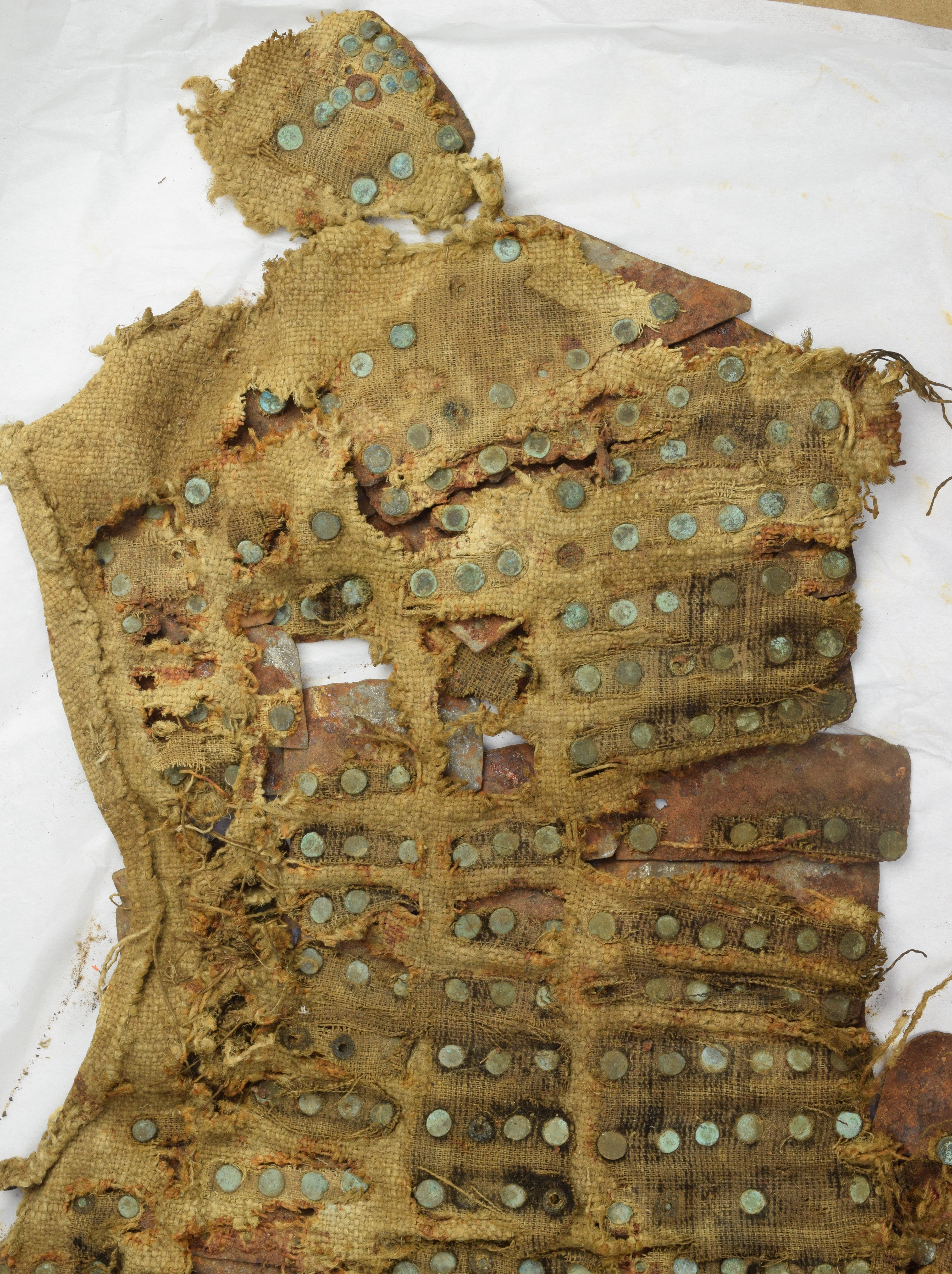


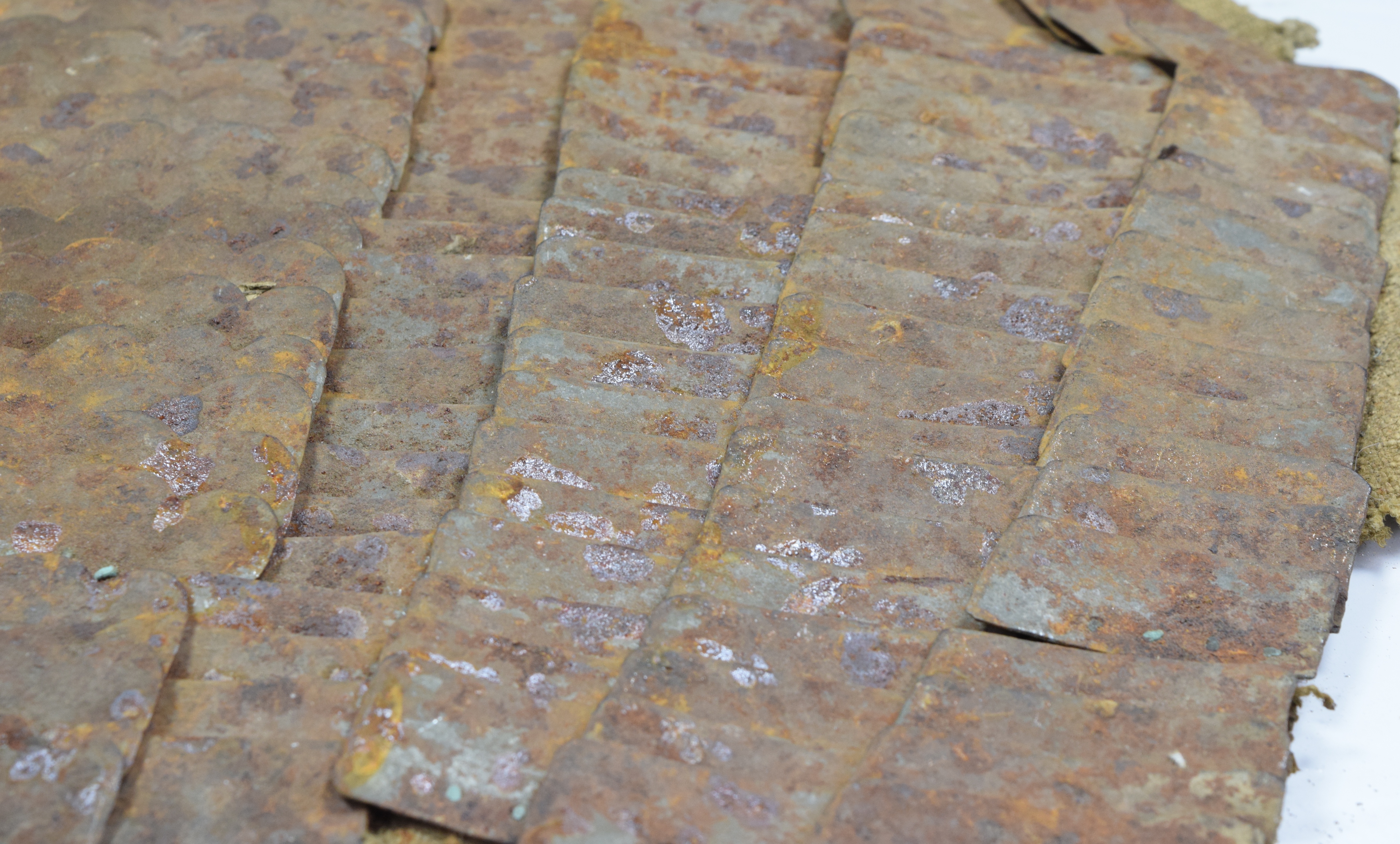

Portion of the back of a brigandine late 16th c.
Formed of a large number of tinned plates secured to a fabric shell with copper alloy rivets. Originally covered the back, terminating at the waist. Rivets on each plate forming a single row. Consisting of a central band of tapering plates with scalloped upper edges over the spine and four columns of plates covering the remainder of the back. The remaining columns of plates tapering to the waist and then fitted to the armhole. Major losses, but most of one side remains along with much of the central band, the lower half of the other side and the outer two rows next to the arm. Even though fragmentary, it illustrates the typical construction of a 16th c. brigandine. Rivets are mostly clinched, reflecting the common method in brigandines. They are more like clinch nails than typical rivets, leading to a common name - armoring nayles. Initial investigation of the fabric cover indicates that it was originally composed of (at least) two layers of fabric - the inner a coarser, heavier weave and the outer a finer weave which seems to have remains of pile. Illustrated as purchased. Inside as displayed at the auction house, outside after it was initiallly opened up.
Measurements: Current weight app. 3 pounds 14 ounces. Thickness of some accessible plates: small separarate one .032 in., the other separate one .040-.065 in., a couple more that separate are .030-.045 in. Some of the thickness is likely due to rust. Realistically the plates were likely mostly .030-.060 in.
If you have any questions, please send them to Wade Allen
This site last updated Wed Jul 09 21:38:05 EDT 2025